


Why is it a Dragonfly or a Damselfly
Dragonflies and Damselflies differ by:
Click on anywhere of an images of a Dragonfly or Damselfly to open the guides to Dragonfly or Damselfly Families
Dragonflies


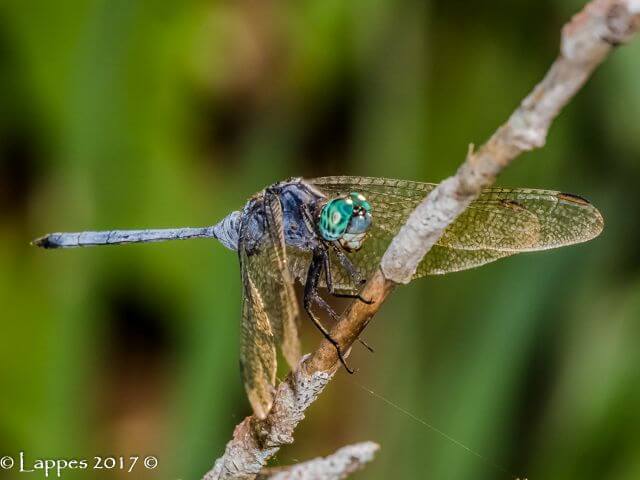

For a complete list of dragonfly families click HERE
Damselflies

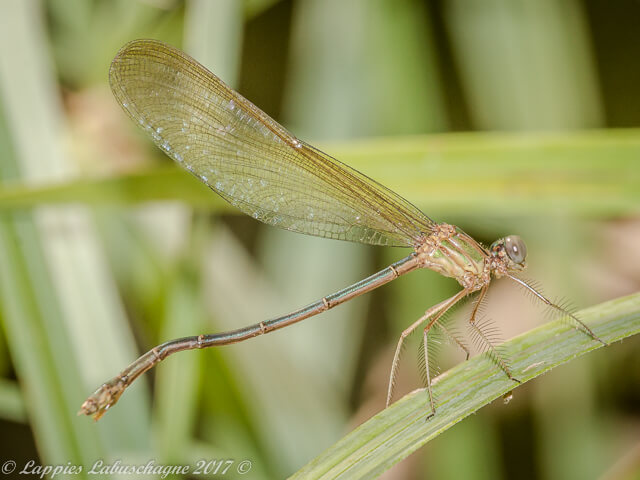


For a complete list of damselfly families click HERE
The detail
Scientific classification
Dragonflies and damselflies belongs to the Order Odonata (described by Selys in 1854)
- Odonata is an order of flying insects that includes the dragonflies and damselflies.
Order Odonata is divided the infraorders
Anisoptera Dragonflies
- Dragonfly are a flying insect belonging to the order Odonata, infraorder Anisoptera, (because the hindwing is broader than the forewing). Adult dragonflies are characterized by a pair of large, multifaceted compound eyes, two pairs of strong, transparent wings, sometimes with coloured patches, and an elongated body. Most ragonflies hold the wings flat and away from the body
Zygoptera Damselflies
- Damselflies are flying insects belonging to the order Odonata, infraorder Zygoptera, (because the hindwing is similar to the forewing) They are similar to dragonflies, but are smaller and have slimmer bodies. Most species fold the wings along the body when at rest
General
- Dragonflies and Damselflies are predatory insects, both in their aquatic nymphs stage (also known as naiads) and as adults. In some species, the nymphal stage lasts for up to five years, and the adult stage may be as long as ten weeks, but most species have an adult lifespan in the order of five weeks or less, and some survive for only a few days.[2] They are fast, agile fliers capable of highly accurate aerial ambush, sometimes migrating across oceans, and often live near water. Many species are sexually dimorphic, the males often being more brightly coloured than the females.. They have a uniquely complex mode of reproduction involving indirect insemination, delayed fertilization, and sperm competition. During mating, the male grasps the female at the back of the head, and the female curls her abdomen under her body to pick up sperm from the male's secondary genitalia at the front of his abdomen, forming the "heart" or "wheel" posture. The pair often remain together with the male still clasping the female while she lays eggs within the tissue of plants in or near water using a robust ovipositor.
- Fossils of very large dragonfly-like insects, sometimes called griffinflies, are found from 325 million years ago (Mya) in Upper Carboniferous rocks; these had wingspans up to about 750 mm (30 in), but were only distant
- The Zygoptera are an ancient group, with fossils known from the lower Permian, at least 250 million years ago. All the fossils of that age are of adults, similar in structure to modern damselflies, so it is not known whether their larvae were aquatic at that time. The earliest larval odonate fossils are from the Mesozoic.[2] Fossils of damselfly-like Protozygoptera date back further to 311–30 Mya.[3] Well-preserved Eocene damselfly larvae and exuviae are known from fossils preserved in amber in the Baltic region.[4]
General description
Dragonflies
For a detail description of the Damselfly click HERE to link to the damselfly page on Wikipedia
Southern African Species
Click HERE for a list of Southern African Damselflies